Economic Archives: Where Sources for Company History Are Kept
Anyone who wants to reconstruct a company's history usually looks first inside the company itself. Yet the records kept there rarely add up to a complete picture. This text shows which institutions collect sources and how their holdings complement one another.
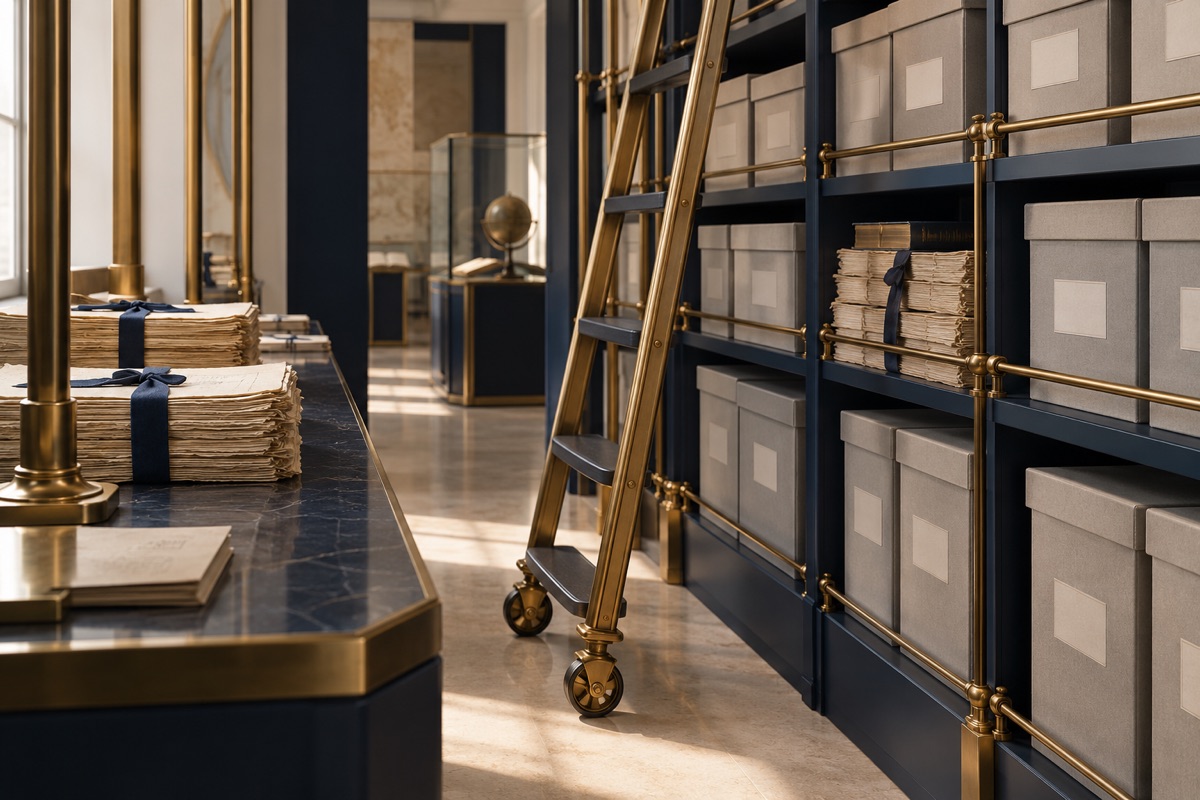
What an Economic Archive Is
An economic archive collects and catalogs records produced in the course of business activity. The Rhenish-Westphalian Economic Archive in Cologne was founded in 1906 and calls itself the oldest regional economic archive. Its founding year shows how far back the tradition of such collections reaches.
There is also a professional association: the Association of Business Archivists (VdW) was founded in 1957 and publishes the journal "Archiv und Wirtschaft". It also advises companies that want to set up an archive of their own. Anyone who wants to put their own records in order will find a point of contact here.
Your Own Holdings and Company Files
Before you start searching other archives, take a look at what you already have. Company files mainly include minutes, contracts, correspondence, photographs, plans and product catalogs. Each of these groups of sources speaks to different aspects: minutes document decisions, contracts the relationships with partners. Catalogs and plans show what was actually made and built.
These records form the basis of the research, but they usually show only the company's own view. Outside holdings therefore help to test your own account against other sources.
The Chamber of Commerce Archive
Archives of chambers of industry and commerce can contain company files. One example is Bremen: the archive of the chamber of commerce there holds company files that have already supplied material for several corporate chronicles. Such holdings thus serve not only storage but also the study of company history. The access rules can be requested directly from the institution in question.
Publications About Companies
Not every source is a file. The Bavarian Economic Archive collects publications about firms, including commemorative volumes for anniversaries, and treats them as historical sources. Some caution is in order when reading them: such volumes were written for festive occasions and usually show the company at its best.
Combining the Sources
Good research brings together your own records, chamber holdings and publications. The sources complement each other and make it possible to compare different accounts of the same event. In the end it should be clear what is documented and what is merely told. How long records must be kept is covered in the text on retention periods.